
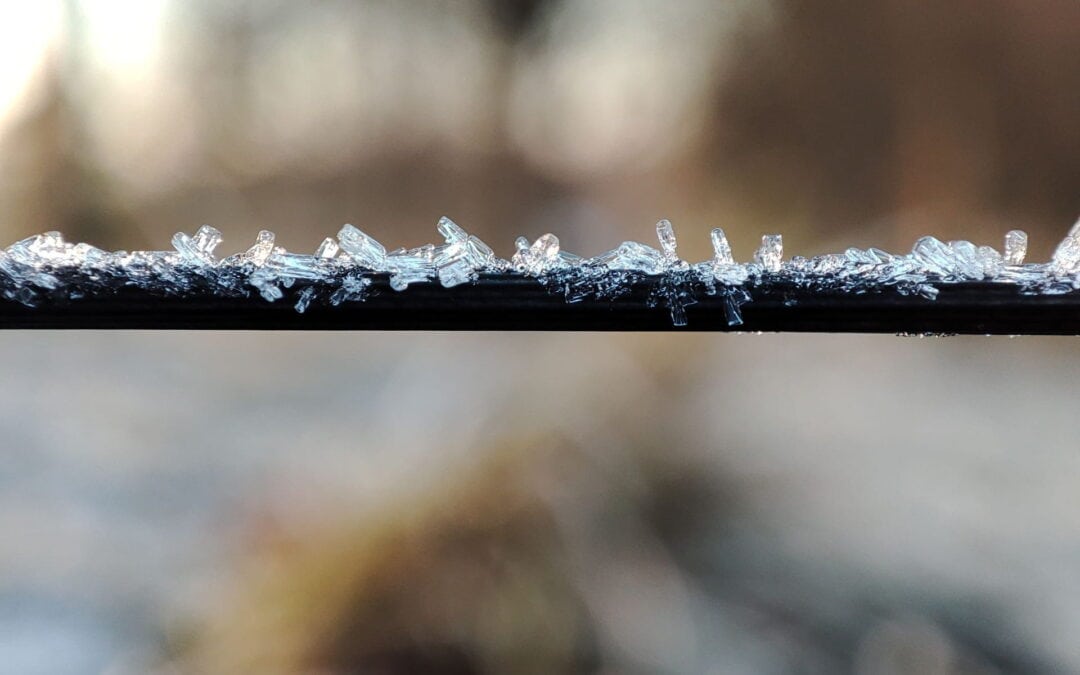
Ice on an air conditioner means heat transfer, airflow, or refrigerant conditions are no longer working as intended. When someone asks what causes an air conditioner to freeze up, the answer usually starts at the evaporator coil, where moisture can freeze after coil temperature drops too far. AC freezing up may come from a filter restriction, coil fouling, blower trouble, or refrigerant loss. These sections explain the causes, safe checks, thawing steps, and when AC repair is the right move.
- Ice often starts inside the air handler.
- Several faults can create the same symptom.
- Repeated freezing calls for diagnosis.
Why AC Is Freezing
A service check for AC freezing up usually begins with the filter, returns, supply airflow, blower, and coil before refrigerant is blamed. One hands-on example involves finding ice on a suction line and weak vent flow, then opening the return grille and discovering a filter packed with lint. The U.S. Department of Energy says “Fouling of the evaporator reduces airflow, will eventually cause the coil to freeze over” and may damage the compressor. Professional AC repair works better when airflow is checked before refrigerant is added.
- Inspect the filter first.
- Compare airflow between rooms.
- Listen for changes in blower sound.
- Look for frost on refrigerant tubing.
Dirty Filters Restrict Airflow
A loaded filter can starve the evaporator of the room air needed to carry heat across the coil. ENERGY STAR recommends checking filters every month during heavy-use seasons and changing them at least every three months when needed. A filter replacement will not melt ice that has already formed, so a professional AC repair technician may still be needed if the system freezes again after thawing.
- Match the filter dimensions.
- Follow the airflow arrow.
- Check return grilles for buildup.
- Avoid stacking filters unless specified.
- Recheck vent flow after replacement.
Blocked Airflow Freezes Coils
Closed registers, blocked returns, duct restrictions, coil fouling, and fan faults can all reduce air crossing the evaporator. DOE guidance says residential air conditioners are generally designed for about 350 to 400 cfm per ton of cooling capacity, and ENERGY STAR reports airflow problems can reduce system performance by up to 15 percent. AC repair technicians can measure airflow and pressure instead of judging the problem from vent temperature alone.
- Keep return grilles unobstructed.
- Open supply registers.
- Check accessible ducts for crushing.
- Request airflow measurements for recurring ice.

Low Refrigerant Causes Ice
Too little refrigerant can lower suction pressure enough for ice to form on the evaporator. DOE field data from more than 4,000 residential systems found about 34 percent were undercharged, 28 percent were overcharged, and 38 percent had the correct charge. EPA requires Section 608 certification for technicians who recharge stationary air-conditioning equipment, so refrigerant belongs with trained personnel.
- Ice alone does not prove refrigerant loss.
- Hissing can be one clue.
- Pressure and temperature readings matter together.
- Leaks should be found before repeated charging.
- Homeowners should not open the refrigerant circuit.
Blower And Control Problems
The blower must move enough air across the evaporator while controls keep the cooling cycle operating as designed. DOE field measurements of 4,168 air conditioners found 44 percent had improper airflow, showing why a running fan does not prove the system is moving enough air. AC repair may uncover a motor, capacitor, fan-setting, thermostat, or duct-pressure problem behind the ice.
- Weak vent flow can signal blower trouble.
- New humming deserves attention.
- Fan operation does not confirm correct airflow.
Ice On AC Unit
Ice on AC unit tubing or the evaporator cabinet means cooling should not be forced to continue. DOE explains that ice restricts heat transfer and adds airflow resistance, which can reduce performance and shorten compressor life. The frozen AC unit should be allowed to thaw, then the filter and vents can be checked before another cooling attempt; recurring ice calls for professional AC repairs.
- Turn cooling mode off.
- Let ice melt without tools.
- Protect floors from meltwater.
- Photograph the ice pattern before thawing.
When AC Repair Helps
Homeowner checks should stop when freezing involves refrigerant, electrical parts, a blower failure, or repeated indoor AC coil freezing up. EPA says refrigerant for stationary equipment is generally sold only to certified technicians or the companies that employ them, and regulated refrigerants cannot be intentionally vented during service. AC repair should use measurements to determine whether airflow, charge, controls, contamination, or a failed part caused the freeze.
- Seek service when ice returns.
- Stop operation after repeated breaker trips.
- Ask which measurements support the diagnosis.
- Keep records of refrigerant additions.
- Report water around the air handler.
Prevent AC Freezing
Maintenance can catch restrictions before they turn into a shutdown during peak cooling use. ENERGY STAR says dirt and neglect are leading causes of heating and cooling system failure and recommends a yearly pre-season checkup. Filter checks, coil inspection, blower testing, drain service, and refrigerant verification also give an AC repair technician a service history when AC freezing up returns.
- Inspect filters during heavy cooling months.
- Keep equipment access clear.
- Schedule pre-season service.

AC Repair Key Takeaways
AC freezing up is usually a symptom of a heat-transfer problem rather than an ice problem by itself. Airflow restriction, refrigerant charge, coil condition, and blower operation can overlap, which is why accurate AC repair starts with testing instead of guessing. DOE research has documented refrigerant and airflow faults across thousands of residential systems, supporting a measurement-first approach when AC coil freezing up keeps returning.
- Start with the filter and airflow path.
- Do not assume every icy coil has a leak.
- Shut cooling off while ice melts.
- Use AC repair for sealed-system work.
FAQs
Why Is My AC Freezing?
Why is my AC freezing up is usually answered by checking airflow first and refrigerant conditions second. Filters, blocked returns, coil buildup, blower faults, or an incorrect charge can push evaporator temperature below the point where moisture freezes. AC repair testing can separate those causes because several produce nearly identical symptoms.
Can Filters Freeze AC?
A clogged filter can contribute to freezing by limiting the household air crossing the evaporator. ENERGY STAR says a soiled filter slows airflow and makes heating and cooling equipment work harder. AC repair becomes appropriate when filter replacement and thawing do not restore operation.
Does Refrigerant Cause Ice?
An undercharged system can form ice because pressure and saturation temperature in the evaporator may fall too far. DOE warns that incorrect refrigerant charge can damage equipment as well as reduce capacity. AC repair should confirm charge with measurements rather than treating frost as proof of a leak.
Should Frozen AC Run?
An iced system should not keep operating in cooling mode because the restriction can grow as more moisture freezes. DOE says ice on the evaporator restricts heat transfer, raises airflow resistance, and may shorten compressor life. AC repair is warranted when freezing returns after thawing and basic airflow checks.
When Does AC Repair Help?
AC repair is the next step when freezing repeats, airflow remains poor, electrical symptoms appear, or refrigerant trouble is suspected. DOE guidance warns that combinations of faults can create false diagnostic clues, so pressure readings should be considered alongside airflow and temperature data. Root-cause testing protects the compressor and prevents repeated thaw-and-restart cycles from becoming the routine.